Beyond Apocalypse (Part 4) – The Great Return and Pathways to the Centres
**
Reading Parts 1 to 3 for context first is recommended. This chapter requires contemplative thought. The content is based on futurology, incorporating elements of cycle science and the mystical sciences. Readers are encouraged to approach the text with critical yet open minds.
**
Introduction
This chapter delves deeper into the directional energy shifts from outward-expanding energies to contracting energies (mentioned previously 1, 2), driven by the transition from the Maya Fourth World to the Fifth World since 2012. This reversal dynamic is one of the most important aspects of the overall shift era. Practically, it entails several journeys to the centres, for which Pathways are proposed. Diverse spiritual, religious and esoteric themes are integrated. Open-minded reading is suggested.
Preamble
Evolution unfolds cyclically and in a spiral, eternally moving upward in a wave-like process with undulating highs and lows. This process affects all entities. Cyclic law is natural law, and natural law is karmic law. Karmic law unfolds cyclically through energetic cause and effect. At the end of a Great Cycle, natural and karmic laws become more evident, revealing predestination and pre-ordination in an intelligently designed, multidimensional reality.
Navigating Out of Liminality – Orientation and Direction
This series of essays focuses on large-scale societal liminality and ways to navigate out of it. Liminality translates into a void-like situation marked by a lack of structure and a collapse of boundaries, structures, and hierarchies, internally as well as externally, resulting in regression, stasis, nihilism, apathy, and chaos and turmoil.
Self-direction out of such states requires orientation toward destinations, which is why understanding the existence of intrinsic core centres is paramount. Spiritual paths, religions, or beliefs that do not directly acknowledge or emphasise such centres, within humans or nations, may not be conducive to navigating out of liminality and its void-like circumstances.
Archetype vs Archetype
Briefly clarifying what archetypes are and the types referred to in this essay is necessary at this point for clarity. There are different types of archetypes. This chapter focuses on a category of archetypes that define, depict, or symbolise archetypal personalities, characters, identities, deities, and/or avatars.
Anyone familiar with psychometric tests such as the Myers-Briggs Type Indicator (MBTI) 3 based on Carl Jung’s work, would have an idea of these archetypes (personality types) in a contemporary sense. For example, they are used in human resources to match people with the right jobs or to help people better understand their deeper personalities.
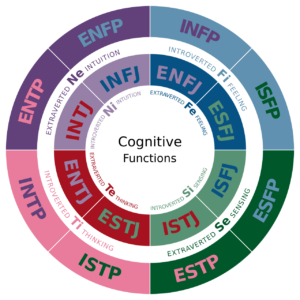 Fig. 1 – MBTI Cognitive Functions (3, 44)
In ancient mythology, gods, deities, energies and epochs had particular archetypes assigned to them to indicate their natures, characteristics, influences and effects. The Maya and Yuga cyclical systems, for example, assign these archetypes to their cycle segments (ages).
The most well-known Maya calendar (their oldest) is the Tzolk’in, which is based on a sacred cycle and has 260 archetype formations 4, 5. Each day has its own main archetype, which is (also) assigned to humans on the day they are born in the Maya communities. This would be the person’s birth archetype (‘born identity’) for which the Mayan Cross 5 provides additional depth.
Another category of archetypes refers to “identical psychic structures common to all” 6 according to Carl Jung. To simplify, these are ‘psychic images’ inherent in all humans (they come ‘pre-installed’ at birth). Examples include the Hero, Great Mother, Wise Old Man, Child, and Trickster archetypes, among others.
An archetype is an “inborn mode of psychic apprehension” (C.G. Jung 7) which results in certain intuitive and instinctual perceptions, thoughts or responses to events or phenomena. The Archetype of the Apocalypse 8, currently active in many people worldwide, is an example.
Archetype and Soul
Terminology matters. The concept of soul lacks a universal, uniform definition. In this regard, the following concise summary relates to this essay’s key directions.
Within some ancient beliefs, ‘soul’ translates into ‘archetype’. Some interpret the archetype to be within the soul. Others consider the soul as being within the archetype. Some view it as both. The finer details of this mystery are for inner seekers to discover. In the context of The Great Return, inner centres do exist, and being oriented toward them is the ideal and objective.
Christianity and Mesoamerican civilisations such as the Mayas and Aztecs believe in souls (but interpretations can differ). However, some beliefs hold that humans do not necessarily have spiritual souls. Examples include mainstream Buddhism (the concept of the ‘not-self’ or ‘no-soul’ 9) and Jehovah’s Witnesses (which associate the human soul only with the physical body 10).
These belief systems do not clearly acknowledge the idea of a spiritual core or essence within each human that continues after death and existed before birth. While a range of beliefs will always exist, soul-centred and/or archetype-centred beliefs are considered ideal for The Great Return.
The World Soul in Transition
Ancient texts indicate that each World Cycle is perceived to have an archetypal soul – a World Soul 11, 12. Each cycle’s soul (its archetype) has a character which differs from those of other cycles. An important key from the outset is that the World Soul functions as an ordering principle 13 for a Great Cycle, just like the human soul functions as a higher ordering and centring principle within individual humans.
Naturally, our human souls exist within the World Soul because we are born during a World Cycle – we are born ‘inside’ the World Soul of the World Cycle. Hence, we partially experience the World Soul’s invisible archetypal energy consciousness, because archetypes are energetic and autonomous; in other words, conscious (according to Jung).
Consequently, we are partially experiencing the World Soul’s reality – and more profoundly (stated as an aside), on a higher level it is experiencing us… However, we are mainly consciously aware of our own personal, subjective consciousnesses and the group consciousnesses of the collectives we belong to or associate with. Generally, (from a consciousness perspective) we have little awareness of multidimensionality.
The One and the Many
Our personal consciousnesses are small fractals within the World Soul’s grand archetypal consciousness because our personal archetypes are encoded in the World Cycle. We are tiny, diversified, partially conscious, differentiated reflections and aspects of the World Soul. We are the children (fragments) of the World Soul, becoming aware of our divine designs and origins.
Esoteric mystery schools and ancient civilisations speak of the mystery of the One and the Many 11 referring to the Many residing within the One 11 and the One manifesting as the Many 14. The Bible states in several places that we are made in the likeness of God 15 which could be interpreted similarly.
An implication of cyclical World Soul consciousness, when reflected upon deeply, is that the existence of multiple cycles consisting of cycles within cycles, all with their own archetypes and consciousnesses, means that there is a highly complex, yet structured and ordered, multifaceted Grand Cosmic Consciousness (and design) in existence within which everything exists and from within which everything incubates and unfolds. An invisible cosmic Higher Mind exists.
Revelations of a Divine Architecture
As we become more aware of cycles and their dynamics, our awareness of a Multidimensional Divine Consciousness expands. A divine ordering of reality through cyclical phenomena, intricately created by a Higher Source and a Divine Intelligence for which many names exist in a variety of languages, religions and cultures, slowly comes into view. That the universe itself is conscious becomes undeniable to earnest students who engage in this type of work with reverence.
Considering that aspects of us, our archetypal souls, are embedded within the consciousness of the World Soul can lead to a broader realisation of our existence within a Divine Creation, and to the understanding that we are indeed divine sparks with potential, embedded within and part of Creation itself.
The Embedded and the Autonomous
Mystical revelations and a comprehensive study of ancient metaphysical calendar systems, mythologies, cycles, and spirituality can lead to these conclusions. However, because human souls are autonomous and separate from the World Soul, though embedded within it, we are fully capable of rejecting these notions, ideas, or concepts through free will.
How far we aspire to develop into our higher selves is largely self-motivated and self-directed. Consequently, many people in the current era may remain within the mindsets of the declining old cycle as the World Soul transitions out of the interim underworld phase into the new World Cycle. Future generations will be naturally born into new zeitgeists and realities of the new World.
Human Souls in Transition
The fact that the ancients attributed archetypal characteristics to cycles, and assigned them to deities, means they perceived cycles as having archetypal characteristics, or ‘personalities’.
We are born into a World Cycle’s timeline, ‘personality’ and life cycle. If the World Soul transitions and transforms into the consciousness of a new World Cycle, human souls would undergo transformative processes as well, since they reside within the World Soul and the cycle’s ‘personality’ (energy dynamics) would shift.
Belief systems would inevitably change over time because our conception of our relationship with the Divine would shift as the World Cycle’s consciousness transitions into the next World Soul’s consciousness. Consequently, our perceptions of Divinity would shift too. This deeply mystical revelation was gifted to rare visionaries, mystics and prophets of the past (including Carl Jung 16).
When an archetypal consciousness shift occurs from one cycle to the next, new worldviews slowly arise as the new cycle’s consciousness grows, and old worldviews gradually fade over time. In this context it is a given that our worldviews will shift comprehensively as time passes – which has been the case for millennia. Worldviews are generation-related and era-dependent.
The Journey Home
The mystic knows his task to be the attainment of Being, union with the One, the “return to the Father’s heart”: for the parable of the Prodigal Son is to him the history of the universe. This union is to be attained, first by co-operation in that Life which bears him up, in which he is immersed. He must become conscious of this “great life of the All”, merge himself in it, if he would find his way back whence he came. – Evelyn Underhill (Mysticism – 1911) 17
A multifaceted inner architecture exists within each one of us (“you have a universe inside of you” 5, 14), with great depth and complexity, which is discoverable. The hidden reality is that humans are inherently unique and autonomous but must develop and strengthen that autonomy through mystical journeys inward and awareness of their inner cores.
We all have a pre-existing outline of our internal centres. These outlines and their content cannot ‘be lost’ (other than in exceptional cases 18), but many people have not fully discovered their centres for themselves. Others, although having discovered them partially, have drifted from them.
The concept of The Great Return implies that an inner core is already there to return to; it pre-exists by default. We just need to find our way back, even if we’ve never been there fully (consciously) before. While many psychological 3 and spiritual tools exist for this endeavour, the Maya calendar ecosystem provides additional depth and multidimentionality.
The most important aspect is that discovering our intrinsic (pre-configured) core archetypes deepens our connection with the Source of Creation – the source of World Cycles from which our archetypes originate. By discovering and rediscovering our intrinsic core centres, we symbolically Return to Source. At a deeper level this is what The Great Return is all about.
The Inner World Tree and The Tree of Destiny
In ancient beliefs, man is seen as a microcosm within the macrocosm, encapsulating the idea that the universe resides within us while we reside within it 14. In this world view, humans are naturally in the process of evolving 19 – and humans have everything within them for it to unfold.
In some forms of esotericism 19, evolution is thought of as an action of self-expression from within the central core of a monad 19 as it interacts with stimuli in the natural environment and external world. It means that we grow from within our inner essences within our centres out into the physical world 19. Hence, we are not born a tabula rasa, a ‘clean slate’, which Carl Jung also stressed 20.
In this context, a person’s environment and life experiences can draw out and deepen their character, which is already pre-configured as an outline in the form of their personal, internal essence and archetype, which, on deeper inspection, is actually multifaceted.
In other words, because of our inherent archetypal characteristics, we can only become who we already are, intrinsically, in the same sense that a tree seed grows into a particular type of tree, with additional unique characteristics shaped by environmental circumstances along the way 5, 19.
A person’s inner tree symbolises a lifetime’s inner growth from birth to death from an initial particular type of seed (archetype 5) at birth, to a fully grown, flourishing and well-developed inner archetypal tree 5 which has come into its own over time as its inherent 19 (pre-configured and encoded 5) destiny.
An oak tree does not turn into a pine tree, or vice versa. Tree seeds can only grow into the trees they were destined (and predestined) to be from their seed levels 19 (and before 5, 14). However, depending on their environments and circumstances, trees’ size, health, characteristics, and lifespans may vary greatly.
As we grow as humans, we rise into our higher potentials with the possibility of flourishing fully (this is known as individuation in Jungian thought – examples of the individuation process were presented in an essay titled Groundhog Day Revisited 21), but first there is an unfolding of latent potentials 19 which pre-exist, irrespective of environmental, familial or cultural circumstances 19.
Humans in Development
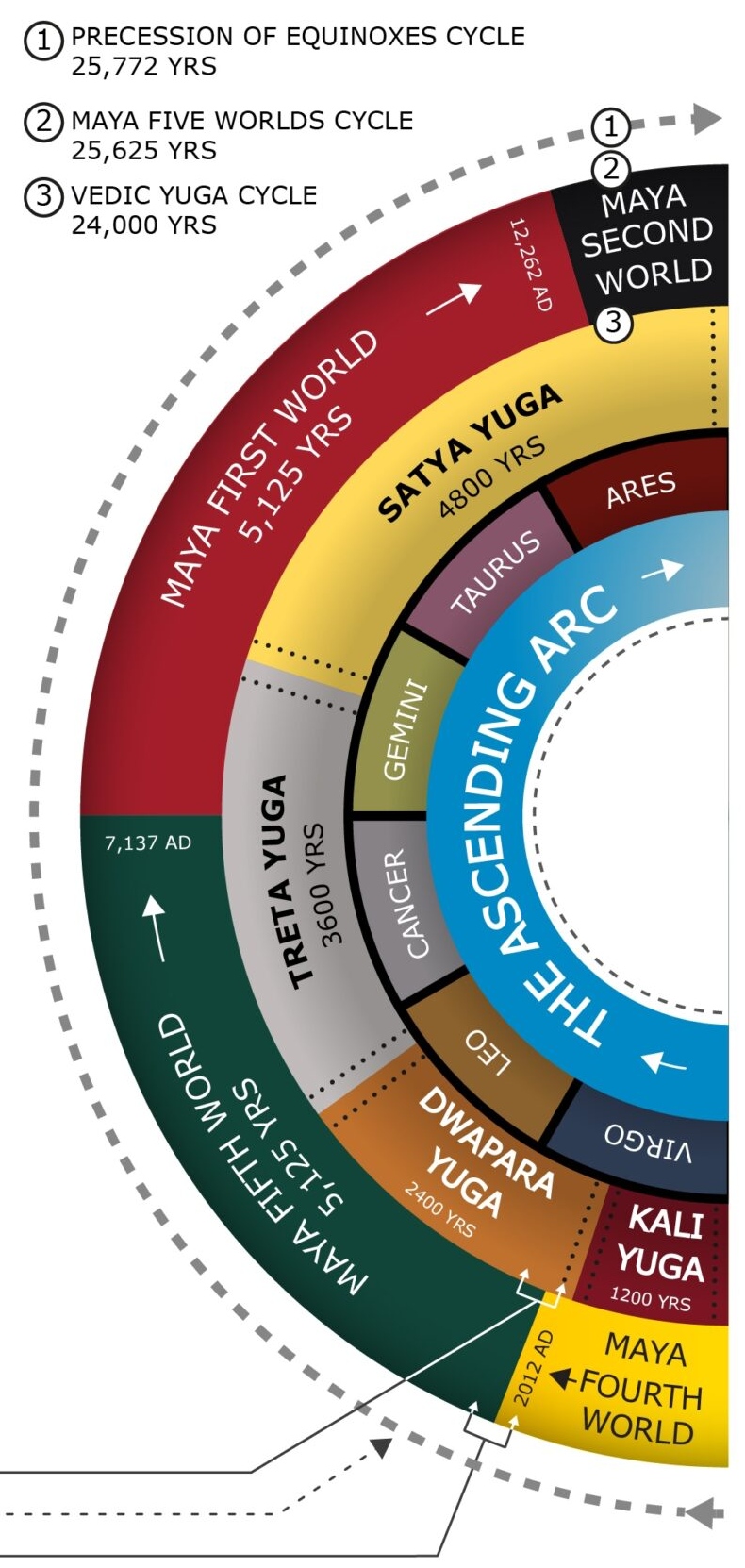
The big-picture view from a cyclical perspective is that we constantly evolve into becoming more human through many cycles. We are humans in development, considering (as noted in other chapters) how far we still must progress on the overall consciousness spectrum, for which a framework exists: the 26,000-year Precession of the Equinoxes Cycle 22 (see Fig. 2).
Comprehending many of these realities places us in a better relationship with the universe and Source of Creation, as it brings humility with regard to the higher spiritual dynamics of the cosmos and our roles within it, which assists us in tempering our egos, considering that humans sometimes have the tendency to imagine themselves as ‘accidental gods’ who are at the ‘pinnacle of their development’.
Imitating the Ultimate Role Model (Revisited and Expanded)
This and the following segments explore Christian viewpoints as this series is written primarily, but not only, for a Western audience. However, the subject is approached through alternative lenses for deeper insights with regard to The Great Return, with an emphasis on Carl Jung’s work in particular.
In a previous chapter 23, it was mentioned that the sociologist and anthropologist René Girard believed that humans should rather ‘imitate Christ’ 24-26 considering people’s propensities for negatively imitating each other, which under certain conditions could escalate to apocalyptical levels. It was also mentioned that for Carl Jung, Christ was a symbol for the Self 27, 28.
Considering the times we are in (between two Great Cycles), the following further interpretations are offered concisely in the context of The Great Return by again drawing on Girard’s and Jung’s views and analyses thereof 25, 26, 28, as their approaches are especially relevant to our complex times.
To recap some of Girard’s views briefly, although all humans imitate, negative imitation can be highly dangerous as it can lead to reciprocal escalation traps which may be difficult to climb down from when winning is perceived as the only end-point and the initial reasons for disagreements are lost as violent negative reciprocity spirals out of control (examples are observable on the world stage).
For this reason, Girard’s view was that if we abstain completely from retaliation (as Christ did), mimetic spirals would become improbable. It would be fair to say, though, that, realistically, this may not always be the case or work in practice, as we can observe.
In the present global geopolitical theatre and context, there have been political sides that have consistently abstained from retaliation, but this did not ultimately prevent them from being drawn into the fray. Non-retaliation could invite further retaliation and escalation as it could be perceived as weakness or submissiveness, thereby ensuring inevitable eventual retaliation for self-preservation.
Being the Living Archetype
One of Carl Jung’s views was that the church emphasised basic or standard forms of the imitation of Christ because human egos can easily inflate 27, resulting in what is known as ‘god complexes’ 27, which can be hugely destructive when held by people who wield a lot of power.
Jung nevertheless felt that, despite the risks, which are very real, an alternative and deeper understanding of how Christ may be imitated effectively could be vital and necessary for those who can maturely integrate the approach.
From Jung’s perspective, imitating Christ’s life requires careful thought while we ‘mind our egos’. We do not ‘become Christ’. Rather, we need to attempt to live our lives as truly and sincerely as He lived his.
Are we to understand the “imitation of Christ” in the sense that we should copy his life and, if I may use the expression, ape his stigmata; or in the deeper sense that we are to live our own proper lives as truly as he lived his in its individual uniqueness? It is no easy matter to live a life that is modelled on Christ’s, but it is unspeakably harder to live one’s own life as truly as Christ lived his. – CG Jung (Psychotherapists or the Clergy – Psychology and Religion: West and East – 1932) 27
An important symbolic (and alternative) understanding of Christ’s life was that He had a unique path to fulfil, gifted to Him at birth. Jesus lived His life authentically (truly) according to His archetype. In this sense, He carried His own Cross (his archetypal centre) long before His life culminated in crucifixion, which was equally symbolic in a variety of ways. 29
Through living according to who He truly was, Christ fulfilled the Divine Mission His Father gave Him. Christ exemplified what it means to be the living archetype. Likewise, we are our born archetypes, too. We cannot ‘be’ someone else’s (archetype), but we can set out to discover our own (archetypes) – our born identities. This aspect is largely missing from Western thought.
However, in practice, it could be easier said than done, according to Jung, given that we do not really have the traditional or cultural tools or mechanisms for it in the modern world (while the Mayas 5, for example, did).
To religiously (symbolically) ‘carry someone else’s cross’ in thought and deed (a great role model’s, for example), rather than carrying one’s own, could actually be easier than having to fully deal with one’s own personality (the positives and negatives, light and dark) and with being human and therefore fallible. In practice, it can be an exceedingly difficult task or path, in many respects.
Symbolism of the Circle and the Cross
For Jung, one mystery behind the crucifixion of Christ is that the Cross is a tree, a symbol of our spiritual and psychological development, while Jesus Christ’s death upon it symbolises the ego’s surrender to that process. – Jungian Alchemist (Carl Jung: The Profound Meaning of the Philosophical Tree – 2026) 29
The Cross is the quintessential symbol of the centre and also represents the inner World Tree, the Philosophical Tree 29 for Jung, and the (internal) Tree of Life 5 in Maya cosmology.
A cross is strongest at its centre, where the East-West and North-South crossbars meet. It symbolises the centre of order, cohesion, structure, harmony, authenticity, wholeness and identity. It is the point of balance between polarities (the East-West axis). It is the point where the conscious and subconscious 27 (the above and below) meet (i.e the North-South Axis). It symbolises the heart and soul.
In early medieval Christianity, some mandalas depicted the quaternity with “Christ in the centre, with the four evangelists, or their symbols, at the cardinal points”, according to Carl Jung. 30
In Maya cosmology, the cross symbolises the quaternity of the four elements 5 and the four directions 5, its centre the centre point of the fourfold universe 5. The circle around the cross, in its most ancient form, symbolises, among other things, nature and natural order, the circularity of seasonality, and the circle of life.
Mandalas… usually appear in situations of psychic confusion and perplexity. The archetype thereby constellated represents a pattern of order which, like a psychological View-finder marked with a cross or circle divided into four, is superimposed on the psychic chaos so that each content falls into place and the weltering confusion is held together by the protective circle – CG Jung (Richard Wilhelm – The Secret of the Golden Flower – 1929) 30
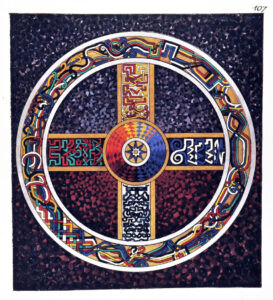
Fig. 3 – Mandala by Carl Jung (Red Book P. 107) – Circle and Cross (source) 45
In some mystery schools, the circle symbolises the One which contains the Many and the All 11. In summary, the circle and cross (as a combined unit) symbolises structured cohesion, balance and wholeness.
Carrying Our Inner Centres
For Jung, one mystery behind the crucifixion of Christ is that the Cross is a tree, a symbol of our spiritual and psychological development, while Jesus Christ’s death upon it symbolises the ego’s surrender to that process. – Jungian Alchemist (Carl Jung: The Profound Meaning of the Philosophical Tree – 2026) 29
Carrying our centres means cultivating, nurturing, growing and strengthening our symbolic inner trees – our inner mandalas. Being oriented to our inner crosses within our inner centres (circles) means we are oriented to the above, which can be especially grounding in times of crises and turmoil.
By carrying our own centres, we live from our true identities where internal order, structure and integrated wholeness reside; where our organic connections to the Divine exist. Deepening these connections can be a profoundly mystical experience 17. The nearer we are to our inner centres, the less likely we are to negatively imitate others.
Walking Our Life Paths
The Perfect Hero 15 is the ultimate role model, but we are not perfect. We have our dark sides. We can, however, aspire to be our best and reach our highest potential, grateful for the life paths, archetypes, and talents we’ve been gifted. In that way we can follow in the footsteps of the ultimate role model (for Christians) while keeping our feet on the ground.
All archetypes have positive and negative sides, but on a human level we naturally focus on the positives. When we commit to carrying our own centres fully and walking our own paths comprehensively, we are also committed to dealing with our shadow sides and working on all aspects 21 of our inner selves, which can seem like a burden because it is one of the most difficult aspects of individuation (practical examples were explored in: Groundhog Day Revisited 21).
Fulfilling Our Missions
In truth, humans are born to serve, directly or indirectly, consciously or unconsciously – and we all have our missions and burdens. This has been an important spiritual and philosophical understanding since ancient times. However, for us in the post-modern, secular, hyper-materialistic world, serving (the community or the nation) is often perceived as too much of a burden 21. In this regard, we need mind shifts to better align with the spiritual realities of the incoming World Cycle.
Carrying (knowing) our own archetypes means we arrive at acknowledging and knowing the missions and responsibilities Creation gifted us. By understanding who we are and what we are here to do, we fulfil our archetypal missions, as Christ did.
By carrying our own burdens, we live in gratitude and wisdom through the life challenges we encounter on our paths, as they support our personal growth throughout our lives. While this can be challenging, doing so naturally serves Creation and humanity as we pursue wholeness through individuation, deepening our connections with Divinity and community.
The Devolution of Individuals and Nations: From Multi-core to Uni-core
During the descent into liminality, an ‘inverted tower’ structurally (see: Mystical Revelations and Cycle Science 31), individuals regress into social collectives, and societal collectives regress into the global collective, the worldwide collective that has embraced globalism and globalisation. This has caused individuals, cultures, nations and civilisations to drift from their authentic core centres.
They have strayed from their core identities, diluting their original principles, ethics, visions, and higher ideals. Fortunately, as with our personal centres, nations and civilisations can find their way back to their unique identities (their core roots) to revive and rejuvenate them, as far as possible.
The Recovery of the Souls of Individuals and Nations
As a result of globalisation, authentic and unique cultural identities have faded, and in their place identities related to global citizenship have formed. Ethics, principles and missions have increasingly been considered planetary, rather than cultural, geographical, national or local.
In the context of depth psychology, an individual can find their deeper personal centre only through inner work such as introspection, reflection, and internal differentiation, typically done in isolation because it requires inner exploration, which can be a solitary endeavour. To achieve this, the individual must, to a certain (or radical 32) degree , detach mentally from the collective.
It is to achieve the solitary condition, the state of being an autonomous individual. This can only be achieved by a separation from unconscious identification with others – Edward F. Edinger (Ego and Archetype – 1972) 32
As we become conscious of the individual’s quest for individuation, the need to return to the core essences of cultures, nations, and civilisations becomes evident as well.
When societies regress into a Modern Tower of Babel, of sorts, recovery happens personally (individually) first, but just like souls exist within humans, they also exist within nations 33. Neither persons nor nations can completely ‘lose their core identities’ in spite of long-term regressions, except under certain 33 – 35 conditions (which may be active for some nations at this time).
On an individual level, individuation happens through mental separation as opposed to over-identification with family or nation. On a national level it happens through a departure from over-identification with families of nations (i.e. country-blocs and groupings of nations).
While this may sound like a contradiction, ideally separation is required first for achieving autonomy before reintegration, resulting in stronger individuals serving their nations (see also Earth: A Greenhouse for Soul-Seeds).
On a personal level, it is done by discovering the authentic core centre, the Self in Jungian terms, or the organic archetypal centre in the context of Mesoamerican spiritual thought.
On a national level, returning to the centre means rediscovering the nation’s authentic character and identity, its archetypal soul. While the processes may differ in some respects, the general concept and approach are the same.
The most important point to keep in mind is that individuals, as well as nations, have inner core centres, archetypal souls that define their inherent authentic characteristics. Those core centres hold their original identities.
The point that has remained most clearly fixed in my mind, after long journeys through the most varied countries, is that each people [nation/culture] possesses a mental constitution as unfaltering as its anatomical characteristics, a constitution which is the source of its sentiments, thoughts, institutions, beliefs and arts. […] The life of a people, its institutions, beliefs and arts are but the visible expression of its invisible soul. – Gustave Le Bon (The Psychology of Peoples – 1898) 33
The Evolution of Individuals and Nations: From Uni-core to Multi-core
Just like individuals need to make journeys back to their intrinsic core identities, something similar would have to happen for cultures, nations and civilisations to regain their concentrated and refined forms to recover from the dilutions (and the resulting delusions) they have undergone during their regressions into an identity-ambiguous, global, consumer culture mass collectively.
While globalism and globalisation favour integrative, collective approaches, personal, cultural and national autonomy require the contrary. Individuals, cultures, and nations need to return to their respective core identities, resulting in a truly multi-core reality rather than the uni-core one that has converged for decades through global migration, integration and amalgamation.
As a thought exercise, consider the following questions: Who am I as an individual when I am separated from my family, nation, and society? Who am I as a nation when I am separated from the ‘families of nations’? Who am I, authentically, as a person and as a nation? How can I rediscover the original core characteristics of myself, my culture, my nation and my civilisation?
Introducing The Cycle of Freedom
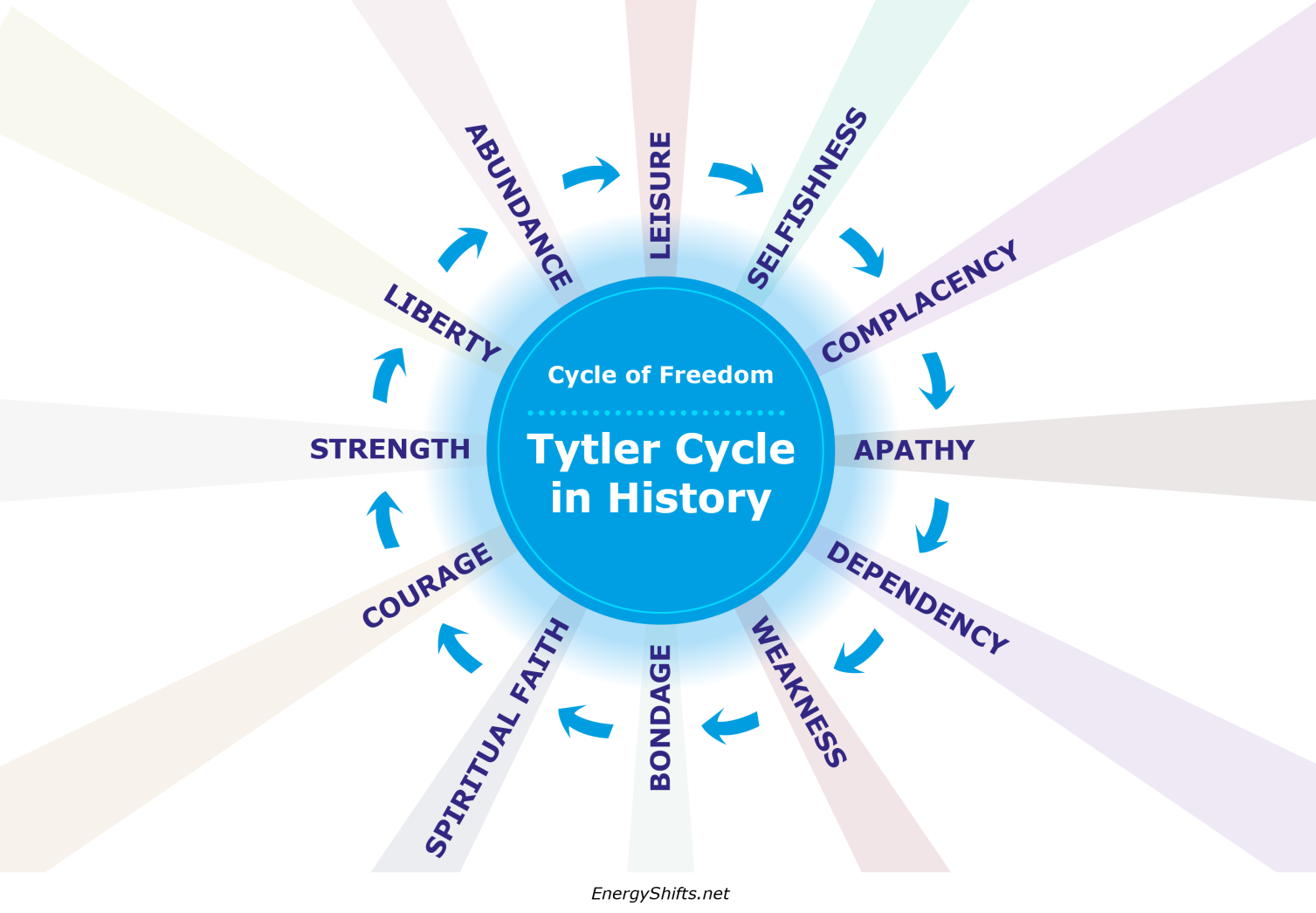
Fig. 4 – The Tytler and Prentis Cycle of Freedom
The first part of this chapter presented examples of what journeys to the centre may look like on a personal level. This segment and the next one discuss an ideal conceptual framework for similar journeys on the parts and paths of cultures and nations. It is depicted by a well-known secular cycle known as The Cycle of Freedom, which is believed to be based on the work of two originators.
The first is Alexander Fraser Tytler, Lord Woodhouselee (1747 – 1813), a Scottish historian who was sceptical of democracy because of its inherent weaknesses 36. One of his notable quotes is:
“It is a law of nature to which no experience has ever furnished an exception, that the rising grandeur and opulence of a nation must be balanced by the decline of its heroic virtues”. – Alexander Fraser Tytler (Universal History from the Creation of the World to the Beginning of the Eighteenth Century – 1835) 36
The second is Henning Webb Prentis Jr. (1884 – 1959), an American industrialist who identified a cyclical process of governance as taking people from bondage to abundance and back to bondage 38.
H.W. Prentis presented this cycle in a speech 38 in 1943, which constitutes the sequence that is known as “The Cycle of Freedom” (see below). At some point, it was attributed to Alexander Tytler and is still commonly known by his name. However, the foundations of The Cycle of Freedom rest on solid ground either way, which is why it is considered important and featured prominently in this chapter.
Navigating Out of Bondage via The Cycle of Freedom
Prentis believed that “popular self-government generates disintegrating forces from within” 38, while Tytler spoke of the inevitable “decline of a nation’s heroic virtues” 37 after a certain period of prosperity and excellence, with both identifying critical phenomena impacting nations and civilisations.
The Cycle of Freedom is remarkably accurate in its correlation with historical events in the rise and fall of civilisations. In our present era we can indeed observe that democracy is in decay where it once flourished. While there are varied reasons for this, the underlying cyclical dimensions are of particular interest from the perspective of cycle science.
To date, The Cycle of Freedom has been commented on and elaborated on by a variety of social and religious commentators due to its historical and contemporary relevance. Drawing on such commentary 39 and primary sources 36-38, the following condensed summaries are presented with some added notes.
-
From bondage to spiritual growth – Through severe trials and ordeals, (the souls of) great civilisations are formed. The wisdom and insights gained from immense challenges and injustices became catalysts for spiritual growth. When almost everything else was lost, and chaos reigned, people reached out to the spiritual world for salvation in the darkest times. 38, 39
-
From spiritual growth to great courage – Strength, tenacity, resilience and faith-based bravery achieved in the crucible ensured capacities for undergoing additional hardships and sacrifices for liberty not yet obtained. Anointed leaders inspired and energised people to make great sacrifices for their future emancipation. Dire circumstances spurred people to fight for just causes and the highest ideals. 38, 39
-
From courage and strength to liberty – Through heroic battles, subjugators, oppressors and foes were systematically defeated 38, 39. Autonomy, self-determination and sovereignty followed, bringing in a new era of justice. Great ideals emerged, and an age of aspirations for excellence commenced. Momentum for nation-building and economic growth accelerated. Institutions were established to ensure enduring rights and liberties.
-
From liberty to abundance – As a result of liberty, affluence increased because consistent, principled hard work and effort were still present in people’s mindsets and lexicon. Abundance was achieved, but this also laid the early seeds of future problems. Excessive abundance turned into growing burdens. 38, 39Austerity, wise judgement and prudence receded. Ideals faded, and living for leisure and indulgence became the primary goal.
-
From abundance to complacency – Comfort is king and economic security is the main objective. Prolonged leisure, conveniences and decadence eventually led to self-satisfaction, selfishness and complacency. Hard-won liberties are taken for granted. Foreign and domestic threats to what was achieved over time begin to accumulate but are not taken seriously or acted on. 38, 39 Leisure and escapism rule the day and complacency deepens.
-
From complacency to apathy – Complacency turns into indifference and denial. Younger generations, although privileged, lack the reference points for the hard work and sacrifices previous generations made. 38, 39. The drive and motivation of older generations are completely lacking. Apathy, pride, entitlement, lack of appreciation, arrogance, free-riding and parasitism are prevalent. Older generations feel they have “done their bit” and are in, or near, retirement.
-
From apathy to dependence and weakness – The motivation, eagerness and enthusiasm for unlimited effort, hard work and nation-building are from a bygone era. Suffering hardships for causes is now considered unbearable. Ideals are sorely lacking, and many, if not most, solutions to problems are handed over to the state. Self-sufficiency in communities and families has declined, and dependencies on centralised governance are becoming all-pervasive. 38, 39
-
From deep dependencies back to bondage – By now society has fallen deep into bondage and is too weak to find a way out. Personal, family and faith-based virtues have been replaced or substituted by centralised and secularised “values” and rules which serve the autocratic, power-driven state. This results in its grip on society consolidating further, with its corruption and decay reaching terminal levels. 38, 39 Following this phase, internal revolts and external invasions tend to follow, and the nation or civilisation may not survive intact 35, 40.
In short, long-term centralisation ultimately leads to bondage, eventually resulting in fracturing and dissolution – and the cycle repeats. As can be noted, The Cycle of Freedom depicts a powerful sequence of events. In a more general sense, it perfectly describes and explains the descents of peoples, cultures and nations into the metaphorical inverted tower, which is the Modern Tower of Babel today.23, 31
Although history shows that some nations survived in diminished and altered forms 40, entering the bondage phase of the cycle could signal the ‘end-game’ for a civilisation’s peak. This is because bondage results from the erosion and abandonment of spiritual and faith-based virtues and ideals, yet they are crucial to maintaining a civilisation’s inner pillars.
Just as a building collapses when its internal structures weaken, so too would a civilisation or nation. Additionally, when a nation’s cultural and spiritual identity (soul) is weakened significantly because it has integrated too many disparate foreign elements (a feature of a civilisation in decline 33, 35), its sense of cultural self-preservation is weakened. Loss of national soul 33 occurs and the patriotism 36 required to act decisively upon internal and external threats fails to materialise until too late.
The Long Decline
The basic principle on which our freedom rests is religious: the conviction that every human being is endowed with an individual soul sacred in the eyes of a Sovereign God. From that thesis stems our concept that the State is the servant of the individual, not the individual the servant of the State. – H.W. Prentis, Jr. (Bulwarks of Freedom – 1946) 37
In the metaphorical inverted tower, which governs the bondage phase of The Cycle of Freedom, individuals are far more likely to be servants of the state than the other way around, because that is a notable feature of centralisation. Due to the citizenry’s loss of autonomy and its helplessness, the state becomes an ‘all-powerful god’ which, for all intents and purposes, replaces God 34.
H.W. Prentis, who could apparently see the writing on the wall back in 1946, suggested a return to faith and spirituality to try to reverse the inevitable, as the West’s direction was clear 37, 38. Gustave Le Bon, although not religious, came to similar conclusions in his book The Crowd 34 (1895) more than half a century before Prentis, who based some of his views partly on Le Bon’s analyses.
So, in my darker moments, I wonder whether Le Bon, Spengler, and other social philosophers were right when they asserted that once a great social trend gets under way, nothing can stop it; it must run its full course to the bitter end. – H.W. Prentis, Jr. (Bulwarks of Freedom – 1946) 37
In his books The Psychology of Peoples 33 and The Crowd 34, Gustave Le Bon explains in detail how civilisations can disintegrate under internal forces, especially in their final stages. These forces can include radical collectivisms that become dominant when late-stage civilisation is in turmoil, a feature of its decline.
At a critical point, militant and extreme forces start to dismantle the civilisation 33 from within through strikes, uprisings, protests, riots and the like, which may lead to civil wars, revolutions and more. Consequently, if the structures holding up a civilisation are sufficiently weakened from within through disorder and anarchy in addition to severe spiritual and intellectual weakening, it could collapse 40.
From Degradation to Spiritual Revival
As noted, important philosophers identified structural deficiencies inherent in large-scale centralisations and democracies through their keen observations of long-term cyclical phenomena. Nations and civilisations are bound by cycles, both sacred and secular. While secular cycles are not overtly linked to sacred cycles, their stages and phenomena are often similar.
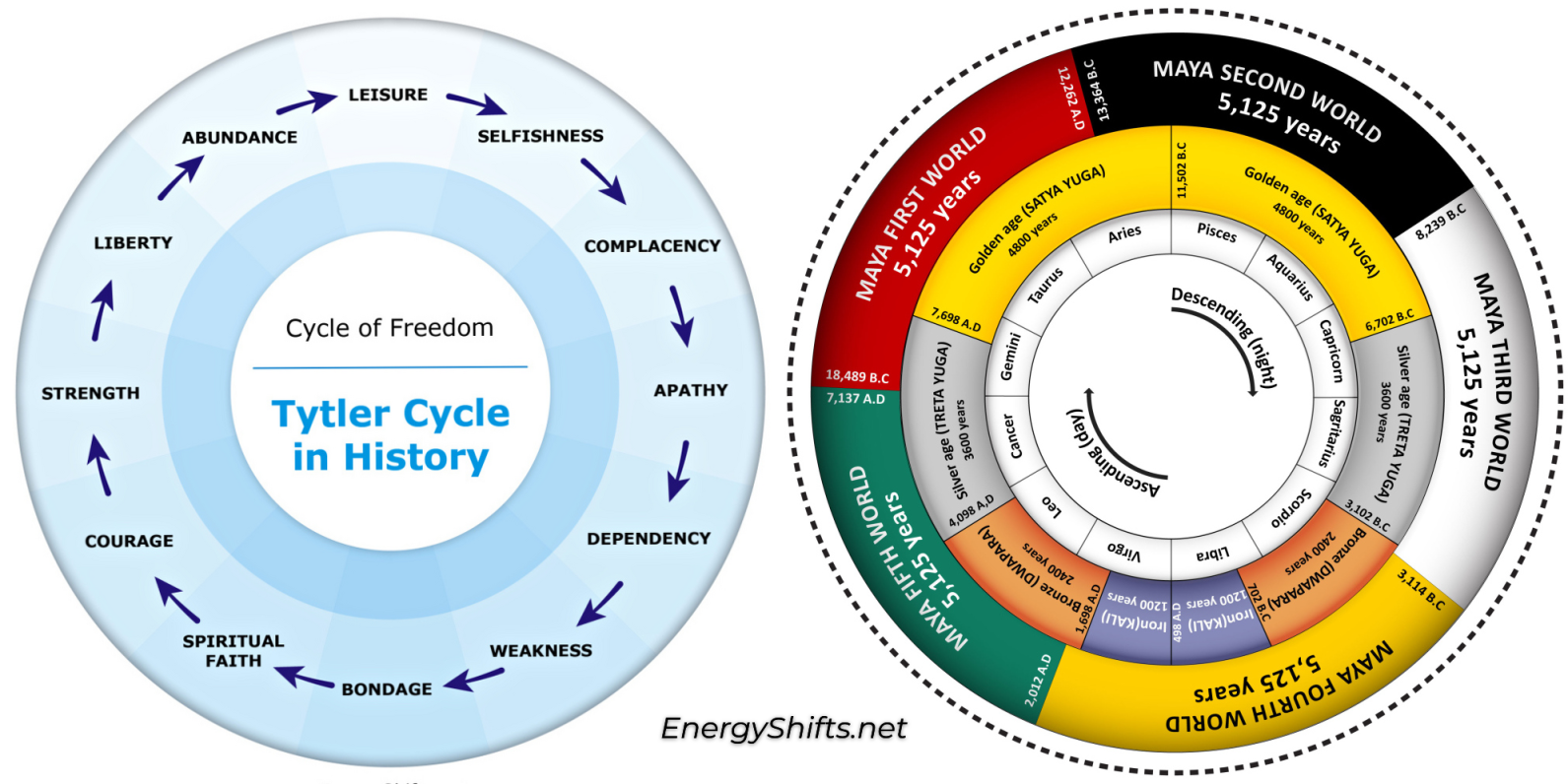
Fig. 5 – The Cycle of Freedom and The Yugas – Side by Side
The Cycle of Freedom is such an example, depicting a decline from a high point through a sequence of phases into a “Tower of Babel” phase. This is similar to the Vedic Yuga Cycle’s decline from its Satya Yuga (Golden Age) era through several phases to finally end up in its Kali Yuga (Dark Age) era at the bottom of the cycle, after which it proceeds on its path back to the top of the cycle after the dark phase bottoms out.
One of the most important principles cycle scientists hold is that cycles inevitably move from one phase to the next. It is only a matter of time before a long phase of a cycle eventually closes, meaning the process cannot be halted, cyclically or structurally.
From Bondage to Spiritual Growth
We tend to think that death is the opposite of life. The ancient Maya did not think this way. The opposite of death is birth — if we observe the two extremes. But between birth and death lies an entire process: a continuous, unrelenting transformation. – Elder Juan Carlos Romera (12 kame: Growth & transformation – Walking the White Road – 2026) 41
The liminal void at the centre of the inverted tower marks a slow convergence into a single global centre, with the loss of multiple centres, until a reversal occurs. That reversal is underway (energetically) and momentum will build, meaning that full convergence is unlikely to materialise.
Cultures and nations usually undergo spiritual revivals organically, when they face major crises, upheavals, and turmoil, as per The Cycle of Freedom. That phase seems imminent considering the worsening geopolitical circumstances and atmosphere.
Individuals, unlike nations, have the most freedom to revive and restore themselves personally in their spiritual faith when they become sufficiently aware of their regressions and declines, whereas nations and civilisations are typically mostly unaware of the extent of their potentially irreversible decadence and decay. Many civilisations have ended this way.
Closing Notes
In the West, one way to navigate these complicated times could be to draw on Christ’s life through Jung’s approach, which could lead us back to our core identities. As noted, additional and complementary alternative Pathways to the Centres are available for wider explorers.
The future of spirituality will likely involve a return to ancient knowledge systems by uncovering what has been lost and putting it back together, a feature of The Great Return.
Of importance is being conscious of what is unfolding 42 and having frameworks of understanding. Since civilisations and nations will face significant challenges and changes in the years and decades to come, conscious navigation could ease the process and help pass the baton 43.
By J.J. Montagnier
J.J. Montagnier is an independent researcher and writer.
He is based in the Southern Hemisphere.
(This content is 100% human created – no A.I. has been used in the research and writing).
This site has a human content only policy.
Completed: October 22, 2026.
Published: November 4, 2026.
Cover Photo: Stone Arch and Lintel, Glendalough Monastic Site, Co. Wiclow, Ireland, 2012. Photograph by the writer. Camera: Nikon F90X (35mm) with Nikon 28-85mm AF lens (transferred from film).
Essay notes: Creative licence has been applied to make some concepts more accessible. This content is provided for educational objectives as a public service and is not for commercial use. It is offered for consideration and contemplation, but readers are encouraged to think critically and come to their own conclusions. Not all topics initially earmarked for this chapter have been included while others have received extra attention as the writing process requires a reordering of themes at times. This is may be the final essay in the series to be published online. Future chapters may become available in a different format (subscribe to receive alerts). Thank you for your interest in this project.
Copyright © All Rights Reserved. GypsyCafe.org
References:
Notes: Using selected quotes and citations does not necessarily imply that the writer supports the entire worldviews of the persons cited, their entire bodies of work, or all the conclusions contained in the referenced materials. The approach is to identify valuable pieces of information from selected source materials for contextual relevance to support or complement the overall theme and arguments presented. Due to the limited scope, further reading may be required – please see references.
1. Montagnier JJ. Energy Shifts. 2021 [cited 2026 Oct 11]. (0) the Maya World Tree. Available from: https://energyshifts.net/maya-world-tree/
2. Montagnier JJ. Energy Shifts. 2025 [cited 2026 Oct 11]. (4) Peak Energies in the Spotlight. Available from: https://energyshifts.net/peak-oil-in-the-spotlight/
3. Myersbriggs.org [Internet]. [cited 2026 Oct 25]. Our legacy. Available from: https://www.myersbriggs.org/about-us/myers-briggs-jung-legacy/
4. Tamayo HA. Maya Skies Maya Astronomy, Calendars & Archaeology. 2026 [cited 2026 Oct 25]. The origins and structure of the Maya 260-day Tzolk’in calendar – Maya skies. Available from: https://mayaskies.net/calendar-systems/why-260-days-tzolkin-calendar/
5. Johnson K. Mayan calendar astrology: Mapping your inner cosmos. Lucita Publishing; 2011.
6. Jung CG. Collected works of C.G. Jung, volume 5: Symbol6s of transformation. Adler G, Hull RFC, editors. Princeton, NJ: Princeton University Press; 2014.
7. Jung CG. Collected works of C.G. Jung, volume 6: Psychological types. Adler G, Hull RFC, editors. Princeton, NJ: Princeton University Press; 2014.
8. Mehrtens S. Jungian Center for the Spiritual Sciences. 2009 [cited 2026 Oct 25]. Jung on the Archetype of the apocalypse. Available from: https://jungiancenter.org/jung-on-the-archetype-of-the-apocalypse/
9. Thera KSD. Budsas.org. [cited 2026 Oct 25]. Is there an Eternal Soul? Available from: https://www.budsas.org/ebud/whatbudbeliev/115.htm
10. JW.ORG [Internet]. [cited 2026 Oct 25]. What happens to the soul at death? Available from: https://www.jw.org/en/library/brochures/What-Happens-to-Us-When-We-Die/What-Happens-to-the-Soul-at-Death/
11. Incognito M. (2013). “The Soul of the World”. The Secret Doctrine of the Rosicrucians. Global Grey Books.
12. Wilberding J., editor. World soul: A history. New York, NY: Oxford University Press; 2021.
13. Peterman A. The world soul in early modern philosophy. In: World Soul. Oxford University Press; 2021. p. 186–222.
14. Maffie J. Utm.edu. [cited 2026 Oct 25]. Aztec philosophy. Available from: https://iep.utm.edu/aztec-philosophy/
15. Biblehub.com [Internet]. [cited 2026 Oct 11]. What it means to be made in God’s image. Available from: https://biblehub.com/articles/What_It_Means_to_Be_Made_in_Gods_Image.htm
16. Edinger EF. Transformation of the god image: Elucidation to Jung’s “answer to job.” Toronto, ON, Canada: Inner City Books; 1992.
17. Underhill E. Mysticism: The nature and development of spiritual consciousness. 2nd ed. London, England: Oneworld Publications; 1999.
18. Wilson JP, Drozdek B, editors. Broken spirits: The treatment of traumatized asylum seekers, refugees, war and torture victims. Taylor & Francis Group; 2004.
19. Davidpratt.info [Internet]. [cited 2026 Oct 11]. Cyclic evolution. Available from: https://www.davidpratt.info/cyclicevo.htm
20. Jung CG. Archetypes and the collective unconscious. 2nd ed. London, England: Routledge; 1959.
21. Montagnier JJ. Gypsy Café. 2015 [cited 2026 Oct 11]. Building The New World Within (8) – Groundhog Day Revisited. Available from: https://gypsycafe.org/2015/05/31/building-the-new-world-within-8/
22. Montagnier JJ. Navigating the greatest shift in 26,000 years [Internet]. Montagu, South Africa: Mountain Path Productions; 2022. Available from: https://energyshifts.net/books/
23. Montagnier JJ. Energy Shifts. 2025 [cited 2026 Oct 11]. (1) Mimetic Rivalry in the Tower of Babel. Available from: https://energyshifts.net/mimetic-rivalry-in-the-tower-of-babel/
24. Girard R. Battling to the end: Conversations with Benoît Chantre. East Lansing, MI: Michigan State University Press; 2010.
25. Walker-Yung A. NBCC featured review: Cynthia L. Haven on René Girard [Internet]. National Book Critics Circle. 2010 [cited 2026 Mar 9]. Available from: https://www.bookcritics.org/2010/01/12/nbcc-featured-review-cynthia-l-haven-on-rene-girard/
26. Grande, Per Bjørnar (2023). Mimetic Christology. Philosophy and Theology 35 (1-2):199-228.
27. Jung CG. Collected works of C.G. Jung, volume 11: Psychology and religion: West and East. Fordham M, Edward H, McGuire W, Adler G, Hull RFC, editors. Princeton, NJ: Princeton University Press; 2014.
28. Wright J. Yumpu.com. 2001 [cited 2026 Oct 11]. Christ, a Symbol of the Self. Available from: https://www.yumpu.com/en/document/view/3790925/christ-a-symbol-of-the-self-cg-jung-society-of-atlanta
29. Alchemist. Jungian alchemist. 2026 [cited 2026 Oct 11]. Carl Jung: The profound meaning of the philosophical tree. Available from: https://jungianalchemist.substack.com/p/carl-jung-the-profound-meaning-of
30. Wilhelm R. The secret of the golden flower: A Chinese book of life. London, England: Routledge; 2013.
31. Montagnier JJ. Energy Shifts. 2026 [cited 2026 Oct 11]. (2) Mystical Revelations and Cycle Science. Available from: https://energyshifts.net/cycle-science-and-mystical-revelations/
32. Edinger EF. Ego and archetype: Individuation and the religious function of the psyche. Boston, MA: Shambhala Publications; 1991.
33. Le Bon G. The psychology of peoples. British Library, Historical Print Editions; 2011.
34. Le Bon G. The crowd: A study of the popular mind. Dover Publications; 2012.
35. Sorokin PA. The crisis of our age. London, England: Oneworld Publications; 1992.
36. Tytler AF. Universal history, from the Creation of the World to the Beginning of the Eighteenth Century (volume 1). General Books; 2012.
37.Prentis HW. Bulwarks of freedom. Princeton University Press; 1946.
38. Prentis HW Jr. Core Human Competence. [cited 2026 Oct 12]. Cult of Competency. Available from: https://corehumancompetence.com/chc-files
39. Pope C. Community in Mission. 2016 [cited 2026 Oct 12]. The Eight Stages of the Rise and Fall of Civilizations. Available from: https://blog.adw.org/2016/10/eight-stages-rise-fall-civilizations/
40. Montagnier JJ. Energy Shifts. 2022 [cited 2026 Oct 12]. (2) The Cyclic Reordering of Civilizations. Available from: https://energyshifts.net/the-cyclic-reordering-of-civilizations/
41. Paez D. Walking the White Road. 2026 [cited 2026 Oct 18]. 12 kame: Growth & transformation. Available from: https://walkingthewhiteroad.substack.com/p/12-kame-growth-and-transformation
42. Montagnier JJ. Energy Shifts. 2026 [cited 2026 Oct 25]. (3) The Great Crossing. Available from: https://energyshifts.net/the-great-crossing-and-practical-transition-pathways/
43. Montagnier JJ. Energy Shifts. 2021 [cited 2026 Oct 25]. (5) The Lights Along the way [updated]. Available from: https://energyshifts.net/the-lights-along-the-way/
44. JakeBeech. Cognitive Functions.svg [Internet]. Wikimedia Commons; 2016. Available from: https://commons.wikimedia.org/wiki/File:Cognitive_Functions.svg
45. Jung CG. The Red Book: Liber Novus. Shamdasani S, editor. New York, NY: WW Norton; 2009.

1 Comment
Great post, JJ ~ with all the turmoil in the world, social and spiritual disorientation is everywhere, and I agree it does begin with rediscovery. The distinction between imitating another’s path and living your own with sincerity is spot on… the image of the inner tree you describe helps us imagine growth as an unfolding of what is already there. Reading this, after seeing the incredibly optimistic election results in the USA this morning, makes me believe the future will be much brighter. Cheers to another wonderful post and a great finish to ’26. Hard to believe it’s already November. Take care, my friend.